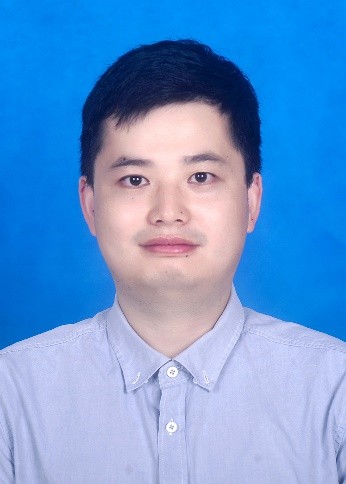
Biography: Jun Zhu received the Ph.D. degree from the National University of Singapore, Singapore, in 2020. He is currently an Associate Professor and a PhD supervisor with the School of Civil Aviation, Northwestern Polytechnical University, Xi'an, China. His research interests include interpretable aircraft fault-data generation, transfer fault diagnosis, and remaining useful life prediction. He has presided many research projects, including the Youth Program of the National Natural Science Foundation of China, military vertical research projects, the Special Grant of China Postdoctoral Science Foundation, the General Grant of China Postdoctoral Science Foundation, and the Youth Program of Shaanxi Provincial Natural Science Foundation. He has published more than 30 high‑level papers in prestigious domestic and international academic journals such as IEEE Transactions on Industrial Electronics, Mechanical Systems and Signal Processing, and IEEE Transactions on Industrial Informatics. The total citation of his papers exceeds 3000, among which 16 papers are published as the first or corresponding author. The highest single‑paper citation is over 800, and 7 papers have been selected as ESI Highly Cited Papers. He serves as an Associate Editor for IEEE Transactions on Instrumentation and Measurement and received the 2024 IEEE TIM Andy Chi Best Paper Award.
Speech Title: Data and Knowledge-Driven Aircraft Fault Data Augmentation and Lifetime Prediction
Abstract: Intelligent operation and maintenance of aircraft serves as a critical guarantee for flight safety. This speech systematically reviews the research background, key challenges, series of achievements, and future development trends. Aiming at the existing challenges including difficult multi‑source information fusion, obstacles in domain information transfer, insufficient degradation characterization capability, poor accuracy of life prediction, and difficulties in embedding prior knowledge into models, three research directions are proposed: aircraft fault diagnosis based on multi‑source information fusion and transfer, aircraft fault prediction driven by synergistic data‑knowledge approaches, and research on prior‑knowledge‑empowered autonomous fault perception for aircraft. In collaboration with COMAC and the Second Academy of Aerospace Science and Industry of China, application validations have been carried out on key aircraft equipment such as pressure shut‑off regulating valves, aero‑engines, and satellites.

Biography: Dr. Bingchang Hou is affiliated with the State Key Laboratory of Mechanical Transmission for Advanced Equipment, Chongqing University, China. His research interests cover machinery fault diagnosis and prognostics as well as intelligent autonomous systems. Representative original contributions include impulsive mode decomposition, new sparsity measures (e.g., generalized Gini index), optimized weights spectrum, difference mode decomposition, etc. He was awarded the fellowship of China National Postdoctoral Program for Innovative Talents. He earned his Ph.D. in Mechanical Engineering (Industrial Engineering) from Shanghai Jiao Tong University, China. During his doctoral studies, he conducted a one-year visiting research at City University of Hong Kong, and secured the First batch of the NSFC Basic Research Program for Doctoral Students.
Dr. Hou has five several Outstanding Reviewer Awards from IEEE TIM and MSSP. He serves as an Associate Editor of IEEE Transactions on Instrumentation and Measurement, and a Youth Editorial Board Member of the Journal of Reliability Science and Engineering and Journal of Dynamics, Monitoring and Diagnostics. He was named a 2026 Emerging Leader by Measurement Science and Technology, and included in the 2025 World’s Top 2% Scientists list released by Stanford University and Elsevier.

Biography: Dr. Laihao Yang received his Ph.D. Degree in the School of Mechanical Engineering from Xi’an Jiaotong University. He was a research fellow of the Structural Dynamics & Acoustic Systems Laboratory (SDASL). He is now in the faculty of the School of Mechanical Engineering at Xi’an Jiaotong University. His research interests include nonlinear vibration modeling and analysis, data-driven structural dynamics, compressive sensing, interpretable AI, and soft robotics. He is the recipient of the first Prize of Science and Technology Award of Shaanxi Higher Education Institutions and the best paper award of CMMNO 2024. He is currently serving on the Junior Editorial Board Member of Soft Science and Robot Learning, the council member of the Professional Committee for Dynamic Testing in the Chinese Society of Vibration Engineering.

Biography: Junjiang Liu, Ph.D., is a recipient of the Sichuan Provincial Young Talent Program. He currently serves as an Associate Research Fellow at the State Key Laboratory of Rail Transit Vehicle System, Southwest Jiaotong University. He has led or participated in four projects funded by the National Natural Science Foundation of China (NSFC). His current research focuses primarily on inverse problems in dynamics, vibration fatigue analysis, and structural health monitoring. His research aims to address key challenges in structural health monitoring and structural vibration fatigue assessment. He has published more than 20 research papers, which have received over 600 citations.
Speech Title: Theory and Methodology for Lightweight Sensor Network Construction in Indirect Structural External Load Measurement
Abstract: Structural external loads are critical for evaluating the safety and performance of engineering systems, but direct measurement is often challenging in practical environments. This report proposes a lightweight sensor network framework for indirect structural load identification using limited response measurements. An information-driven sensor optimization strategy is developed to determine highly informative sensing configurations under sparse measurement constraints. By incorporating D-optimal design principles and sparse reconstruction techniques, the proposed approach improves load identifiability while reducing the number of required sensors. The framework enables accurate reconstruction of load locations and time histories from limited structural responses, providing an efficient sensing solution for intelligent structural monitoring and digital engineering applications.